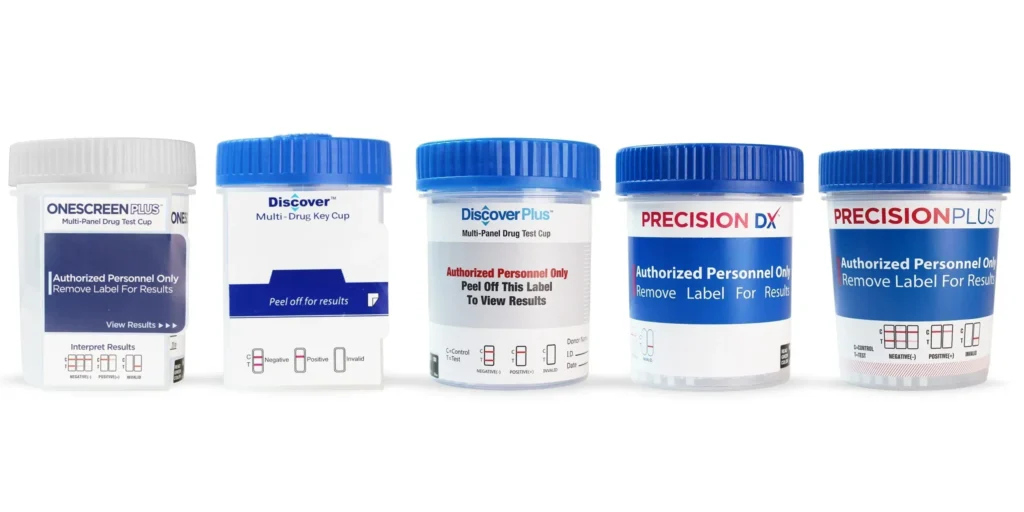
The landscape of substance abuse has evolved dramatically over the past decade, with synthetic drugs, prescription medication misuse, and complex poly-drug use patterns creating unprecedented challenges for drug testing programs. While traditional five-panel tests served their purpose in simpler times, today’s testing requirements demand far more comprehensive solutions. ASC Diagnostics has risen to meet this challenge with innovative drug test cups capable of detecting over 40 different substances in a single test, representing a quantum leap forward in on-site drug screening technology.
The Complex Modern Substance Landscape
Gone are the days when workplace drug testing could rely on detecting just marijuana, cocaine, amphetamines, opiates, and PCP. Today’s substance abuse patterns involve everything from synthetic cannabinoids that change molecular structure monthly to prescription opioids that have fueled a national crisis. Emergency departments see patients who have consumed combinations of substances that would have been unimaginable just a few years ago, while employers struggle to detect emerging threats that traditional testing panels miss entirely.
The consequences of this evolution extend far beyond individual health concerns. Workplace safety incidents linked to undetected substance use cost American industries billions annually, while healthcare providers need rapid, comprehensive screening to make life-saving treatment decisions. Law enforcement and treatment facilities require testing that can keep pace with the constantly changing drug supply, making comprehensive detection capabilities not just convenient, but essential.
ASC Diagnostics: Innovation Through Science
ASC Diagnostics has built its reputation on understanding that effective drug testing requires more than simply adding more substances to a panel. The company’s approach combines advanced immunoassay technology with practical design considerations that make comprehensive testing both scientifically rigorous and operationally feasible.
Founded with a mission to advance workplace safety and public health through innovative diagnostic solutions, ASC Diagnostics has invested heavily in research and development to solve the technical challenges inherent in multi-substance testing. Their FDA-registered manufacturing facilities operate under strict Good Manufacturing Practice standards, ensuring that every test cup meets the highest quality and consistency requirements.
The Science Behind Comprehensive Detection
Creating a drug test cup that can accurately detect over 40 substances simultaneously requires solving complex biochemical and engineering challenges. At its core, the technology relies on immunoassay principles, where specific antibodies bind to target drug molecules or their metabolites in urine samples. However, scaling this approach to detect dozens of substances without interference or cross-reactivity requires sophisticated antibody selection and test design.
Each substance requires carefully selected antibodies that provide optimal sensitivity and specificity for the target compounds. The challenge multiplies when considering that many substances have multiple metabolites, synthetic variants, or chemically similar structures that could cause false positives or negatives. ASC Diagnostics addresses these challenges through extensive validation testing and proprietary antibody development that ensures each substance can be detected independently and accurately.
The lateral flow immunoassay technology employed in these cups uses capillary action to move the urine sample across multiple test strips embedded within the device. As the sample flows, it encounters specific antibody-conjugate pairs that produce visible color changes when target substances are present. The precision required to make this work reliably across 40+ different assays in a single compact device represents a significant technological achievement.
Comprehensive Substance Coverage
ASC Diagnostics’ test cups detect an extensive range of substances that reflect current abuse patterns and emerging threats. Traditional categories like amphetamines, cocaine, marijuana, opiates, and PCP form the foundation, but the real value lies in the expanded detection capabilities that address modern challenges.
The prescription drug panel includes substances like oxycodone, benzodiazepines, barbiturates, methadone, and buprenorphine, addressing the prescription drug abuse epidemic that has become a primary concern for employers and healthcare providers. These substances often appear in workplace incidents and medical emergencies, yet standard five-panel tests would miss them entirely.
Perhaps most importantly, the cups detect synthetic drugs that represent emerging threats in many communities. Synthetic cannabinoids, often called K2 or Spice, constantly evolve as manufacturers modify molecular structures to avoid detection. Synthetic cathinones, known as bath salts, present similar challenges with their rapidly changing chemical compositions. ASC Diagnostics has developed detection capabilities that can identify these substances even as their specific chemical structures evolve.
The inclusion of fentanyl and fentanyl analogs addresses one of the most pressing public health crises of our time. With fentanyl-related overdoses reaching epidemic proportions, the ability to quickly identify exposure to this deadly substance can be literally life-saving in emergency medical situations.
Engineering Excellence in Cup Design
The physical design of the test cups represents careful engineering that balances comprehensive testing capabilities with practical usability. The cups feature ergonomic designs that facilitate easy sample collection while incorporating security features like tamper-evident seals and temperature strips that help detect adulteration attempts.
Built-in adulterant detection capabilities help identify common attempts to defeat drug tests through dilution, substitution, or chemical interference. Temperature monitoring ensures samples are consistent with normal body temperature, while specific gravity and pH testing can detect dilution or chemical adulteration.
The test strip arrangement within each cup optimizes both accuracy and ease of interpretation. Clear result windows are positioned for easy reading, with control lines that confirm the test is functioning properly. Color coding and labeling systems help users quickly identify which substances have been detected, reducing interpretation errors that could compromise testing programs.
Quality Assurance and Regulatory Compliance
Manufacturing test cups that consistently perform across 40+ different assays requires stringent quality control processes that go far beyond typical manufacturing standards. Every production batch undergoes comprehensive testing to verify performance across all substances, with statistical quality control monitoring that ensures consistency over time.
The FDA registration process for these devices requires extensive clinical validation studies that demonstrate accuracy, reliability, and appropriate cutoff levels for each substance. ASC Diagnostics maintains CLIA waiver status for point-of-care use, meaning the tests can be performed by non-laboratory personnel while still meeting clinical accuracy standards.
International regulatory compliance extends the utility of these devices to global markets, with certifications that meet varying national and regional requirements. This global perspective also means the substance panels can be adapted to address regional drug abuse patterns and regulatory requirements.
Real-World Performance and Applications
The true measure of any drug testing technology lies in its real-world performance across diverse applications and environments. ASC Diagnostics’ comprehensive test cups have demonstrated accuracy rates that compare favorably with laboratory-based testing methods, while providing the speed and convenience essential for point-of-care applications.
In workplace settings, these cups enable employers to conduct thorough pre-employment screening, random testing, and post-incident investigations with confidence that they’re detecting the full spectrum of substances that could impact safety. The comprehensive nature of the testing reduces the need for multiple different test types, simplifying inventory management and reducing costs.
Healthcare applications benefit from the rapid turnaround times and comprehensive substance coverage. Emergency departments can quickly identify substance involvement in overdoses or psychiatric emergencies, enabling appropriate treatment decisions. Addiction treatment facilities use the comprehensive panels to monitor patient compliance and identify undisclosed substance use that could impact treatment plans.
Competitive Advantages and Innovation
The ability to detect over 40 substances in a single test represents a significant competitive advantage that extends beyond simple convenience. The comprehensive approach often reveals substance use patterns that would be missed by traditional testing, providing a more complete picture of an individual’s substance use profile.
Cost-effectiveness becomes apparent when considering that comprehensive testing eliminates the need for multiple different test types. Organizations can reduce inventory complexity, training requirements, and administrative overhead while improving detection capabilities. The labor savings alone often justify the investment in more comprehensive testing technology.
The integration capabilities of these test cups extend their utility in modern testing programs. QR codes enable chain of custody tracking, while digital integration possibilities support electronic result transmission and data management. These features help organizations maintain comprehensive records while reducing administrative burden.
Looking Forward: Continued Innovation
ASC Diagnostics’ commitment to innovation ensures that their testing capabilities continue to evolve with changing substance abuse patterns and technological possibilities. Ongoing research focuses on detecting new synthetic drugs as they emerge, improving sensitivity for existing substances, and exploring integration with digital health platforms.
The company’s collaboration with healthcare providers, employers, and public health organizations provides real-world feedback that drives product development. This customer-centric approach ensures that new features and capabilities address actual market needs rather than theoretical improvements.
Conclusion
ASC Diagnostics’ ability to detect over 40 substances in a single drug test cup represents more than just technological achievement—it represents a fundamental shift toward comprehensive, proactive substance detection that matches the complexity of modern drug abuse patterns. For organizations serious about workplace safety, healthcare providers dealing with overdose crises, and public health officials monitoring community substance abuse trends, these comprehensive testing capabilities provide essential tools for protecting individuals and communities.
The combination of scientific rigor, engineering excellence, and practical usability makes these test cups valuable assets for any organization requiring reliable, comprehensive drug testing. As substance abuse patterns continue to evolve and new synthetic drugs emerge, having testing capabilities that can adapt and expand becomes not just advantageous, but essential for maintaining effective testing programs that truly protect safety and health.